


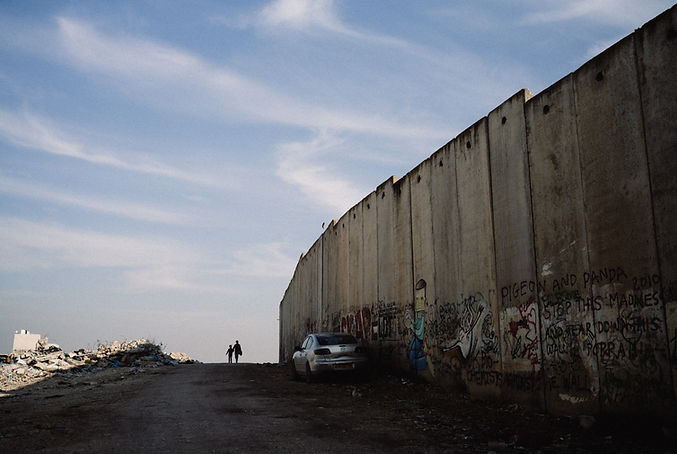
In 2020, the occupied Palestinian territories were already living under a system that numerous international human rights organizations have since described as apartheid.
A regime marked by the separation of populations under different legal systems, severe restrictions on freedom of movement, the expansion of Israeli settlements, military occupation, and the gradual fragmentation of Palestinian land.
While these conditions had become routine for those living in the West Bank, they remained largely absent from international headlines.


The unilateral launch of the so-called “Agreement of the Century” by U.S. President Donald Trump and Israeli Prime Minister Benjamin Netanyahu represented another decisive step in reshaping the political geography of the occupied territories.
Presented as a peace initiative, the proposal legitimized Israeli control over large portions of the West Bank while disregarding Palestinian demands for sovereignty and self-determination.
Although the formal annexation of parts of the territory was later suspended, settlement expansion, land confiscation, military incursions, and the displacement of Palestinian communities continued uninterrupted.


Across the West Bank, demonstrations, local organizing, and acts of civil resistance remained part of everyday life.
These mobilizations were frequently met with arrests, checkpoints, home demolitions, and military force, yet they received limited international attention.
The absence of sustained diplomatic pressure, combined with the growing normalization of the occupation, reinforced a political reality in which the daily experiences of Palestinians became increasingly invisible to much of the world.


For many Palestinians, crossing a military checkpoint is an unavoidable part of everyday life. Movement between towns, access to work, medical care, education, or family often depends on passing through a system of barriers controlled by the Israeli military. Hours of waiting, repeated identity checks, arbitrary delays, and the possibility of being denied passage without explanation have become routine experiences under the occupation.
These crossings have become spaces of humiliation.
Daily routines are interrupted by searches, questioning, and long periods of waiting, often with little information or recourse. The cumulative effect extends beyond physical restrictions, producing a persistent sense of vulnerability and dependence that has defined life under occupation for generations.


The town of Kafr Qaddum has become an example and a symbol of Palestinian resistance. Its residents have been holding a weekly protest every Friday since July 2011.
The first demonstration began after the Israeli army blocked the main road connecting Kafr Qaddum to Nablus, citing security concerns due to its proximity to the Israeli settlement of Kedumim.
Since then, the colonial and expansionist policy in the West Bank has only intensified, and with it, the repression of the demonstrations.


In retrospect, the political climate of 2020 indicated that the conflict was drifting further and further away from a negotiated solution.
The on-going war that broke out in 2023 did not arise in isolation. It followed nearly a century of military occupation, territorial fragmentation, unequal legal systems, and the steady erosion of prospects for a lasting political agreement.
It appears that this decade has only deepened these dynamics, with even greater expansion in the West Bank and an escalating cycle of violence that has confirmed the instability already evident at the time.


